Promotions and Activities


 Home
HomeRainin LTS Pipette Compatible Tips vs Universal Tips: What's the Difference?
 2026-07-09
 1
1
If your lab runs Rainin pipettes alongside other brands, you have likely faced the same question: do you standardize on LTS-compatible tips, or stick with universal tips across the board? The answer depends on your pipette inventory, throughput, and accuracy requirements. This guide breaks down the key differences so you can make the right call.
What Makes Rainin LTS Different?
LTS stands for Lite Touch System — a tip connection design introduced by Rainin to address a common complaint in high-throughput labs: repetitive strain from attaching and ejecting pipette tips hundreds of times per day.
The LTS system achieves this through a shorter shaft and a locking collar mechanism, which distributes the attachment force differently from a standard friction-cone connection. The result is a tip that mounts and releases with noticeably less thumb and wrist pressure.
This is not a minor ergonomic tweak. In labs running multichannel pipettes across full 96-well plates repeatedly throughout the day, the cumulative force reduction is substantial — and the associated reduction in musculoskeletal fatigue has made LTS a preferred system in high-throughput screening and clinical environments.
LTS vs Universal Connection Design
The core difference between LTS-compatible tips and universal tips is the connection mechanism.
Universal tips use a friction-cone fit: the tip's inner cone presses against the pipette shaft under manual force. The seal quality depends on dimensional tolerances between the tip and shaft, and mounting requires enough downward force to achieve a reliable seal. This design works across most major pipette brands — Eppendorf, Gilson, Thermo Fisher, DLAB, and others — because the cone geometry is broadly standardized.
LTS-compatible tips use a bayonet-collar design specific to the Rainin LTS shaft. The collar clicks into position around the shorter LTS shaft rather than pressing onto it. This locking action means the tip is secured mechanically, not just through friction.
| Feature | LTS-Compatible Tips | Universal Tips |
| Connection type | Bayonet locking collar | Friction cone |
| Compatible pipettes | Rainin LTS only | Multi-brand |
| Mounting force required | Low | Moderate |
| Ejection force required | Low | Moderate |
| Seal mechanism | Mechanical lock | Friction pressure |
Accuracy Comparison
Both tip types can deliver equivalent volumetric accuracy — but only when manufactured to the correct dimensional specifications.
For universal tips, seal integrity is the critical variable. A tip with even slight cone diameter variation may seat loosely on certain pipette shafts, introducing air leakage and volume error. Quality universal tips from certified manufacturers hold tolerances tight enough to eliminate this risk across compatible pipette brands.
For LTS-compatible tips, the bayonet collar must replicate the Rainin shaft geometry precisely. A correctly manufactured LTS-compatible tip locks fully onto the shaft and delivers the same accuracy as the OEM version. A poorly made one may feel like it locks but leave a partial gap that affects aspiration volume — particularly problematic at volumes below 10 µL.
In both cases, the manufacturer's dimensional documentation and lot-to-lot consistency are more reliable indicators of accuracy than brand alone. When evaluating suppliers, request QC data that includes tip cone diameter tolerances and leak rate testing results.
Ergonomic Benefits
The ergonomic case for LTS is clearest in two scenarios:
High-repetition workflows. PCR setup, ELISA, compound screening, and similar protocols involve hundreds to thousands of tip attachments per day. The force reduction per tip change adds up — labs that have switched from standard tips to LTS consistently report lower hand and wrist fatigue among technicians.
Multichannel pipetting. Attaching an 8-channel or 12-channel tip rack requires multiplied mounting force compared to a single-channel tip. LTS multichannel tips reduce this considerably, which matters when loading plates throughout an extended run.
Universal tips offer no equivalent ergonomic advantage — their friction-cone design requires the same mounting force regardless of manufacturer. If ergonomics is a priority, LTS is the purpose-built solution.
When Should Labs Choose LTS Tips?
Choose LTS-compatible tips if:
●Your lab uses Rainin LTS single-channel or multichannel pipettes as the primary instrument
●Your workflows involve high-repetition tip changes (PCR setup, ELISA, plate-based assays)
●Technician ergonomics and fatigue reduction are a priority
●You want the mechanical security of a locking tip connection for precision applications
Stick with universal tips if:
●Your lab runs a mix of pipette brands and needs a single tip format across all instruments
●Your Rainin pipettes are used occasionally rather than as the primary workhorse
●Budget flexibility for tip standardization is limited and universal tips already work reliably
Many labs run both: LTS-compatible tips on dedicated Rainin stations for high-throughput work, and universal tips on other benches. This hybrid approach avoids the per-unit cost premium of LTS tips on lower-intensity instruments while capturing the ergonomic benefit where it matters most.
OEM Purchasing Checklist
If you are sourcing LTS-compatible tips or universal tips in bulk for institutional or distribution purposes, use this checklist before committing to a supplier:
Dimensional verification
●Supplier can provide cone diameter and collar geometry tolerances in writing
●LTS collar geometry has been validated against Rainin LTS shaft specification certifications
●RNase-free, DNase-free, DNA-free, pyrogen-free, ATP-free certified
●Sterile options available (radiation sterilization)
●ISO 9001 and ISO 13485 certified manufacturing
Packaging options
●Rack, Bulk, and Refill formats all available
●Rack spacing compatible with multichannel pipettes and 96-well format
OEM capability
●Private label and custom branding available
●Lot-to-lot consistency documentation provided
●Samples available before bulk order commitment
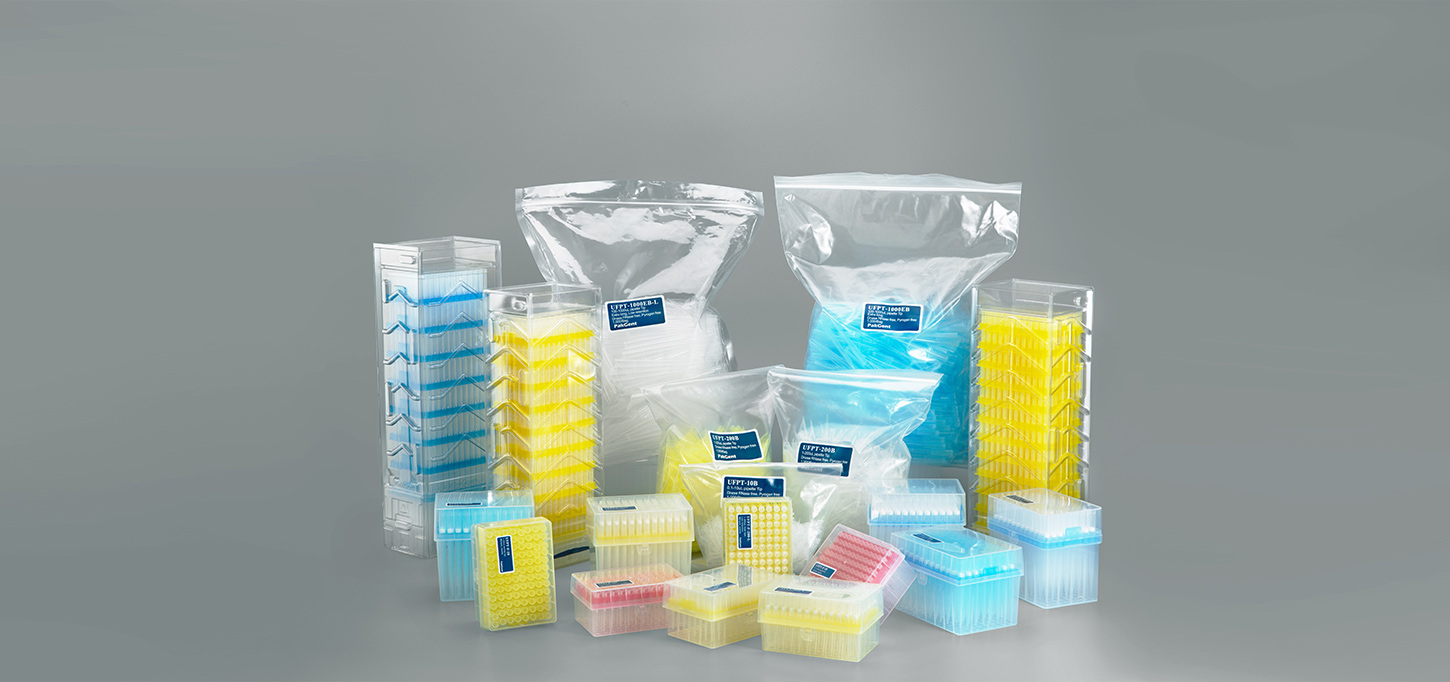
PakGent Bio manufactures both LTS-compatible tips and universal fit tips across standard, filtered, and low retention configurations, certified RNase/DNase-free and produced in ISO Class 7 and 8 cleanrooms.